
Back in 1949, Chris Craft did not include an oil filter on their engines. My research revealed that an internal Chris Craft memo said they expected the engine to outlast the hull, so they decided an oil filter was unnecessary. This might strike you as odd especially since the engine shares its oil with the transmission. I certainly found the engine to be very gunky when I took it apart. I used up ALOT of de-greaser cleaning the inside of this engine! There were more deposits than I’ve seen before.
Now the old advice not to use high-detergent oil in an old engine makes sense. I could just see that detergent knocking a blob of gunk loose that would clog a small oil passage somewhere. Better by far to, as the Beatles say, just “let it be” and hope that gunk stays put.
But since I had it apart and was able to clean it, I decided that I could not in good conscience put this engine back in without an oil filter. That required fabricating a mounting bracket and finding a place to stick it, and adding plumbing lines to get it into the flow. I plumbed it so that the oil passes first through the filter, then the oil cooler, then back into the engine. As you can see from the photo, I mounted it at the rear of the engine, next to the oil cooler. It will be easy to service here.
We still won’t be using high detergent oil though. That would interfere with the operation of the reverse gear, which as I said, gets its lubrication from the engine oil. We’ll use straight weight SAE 30, or SAE 40 depending on where the boat ends up.


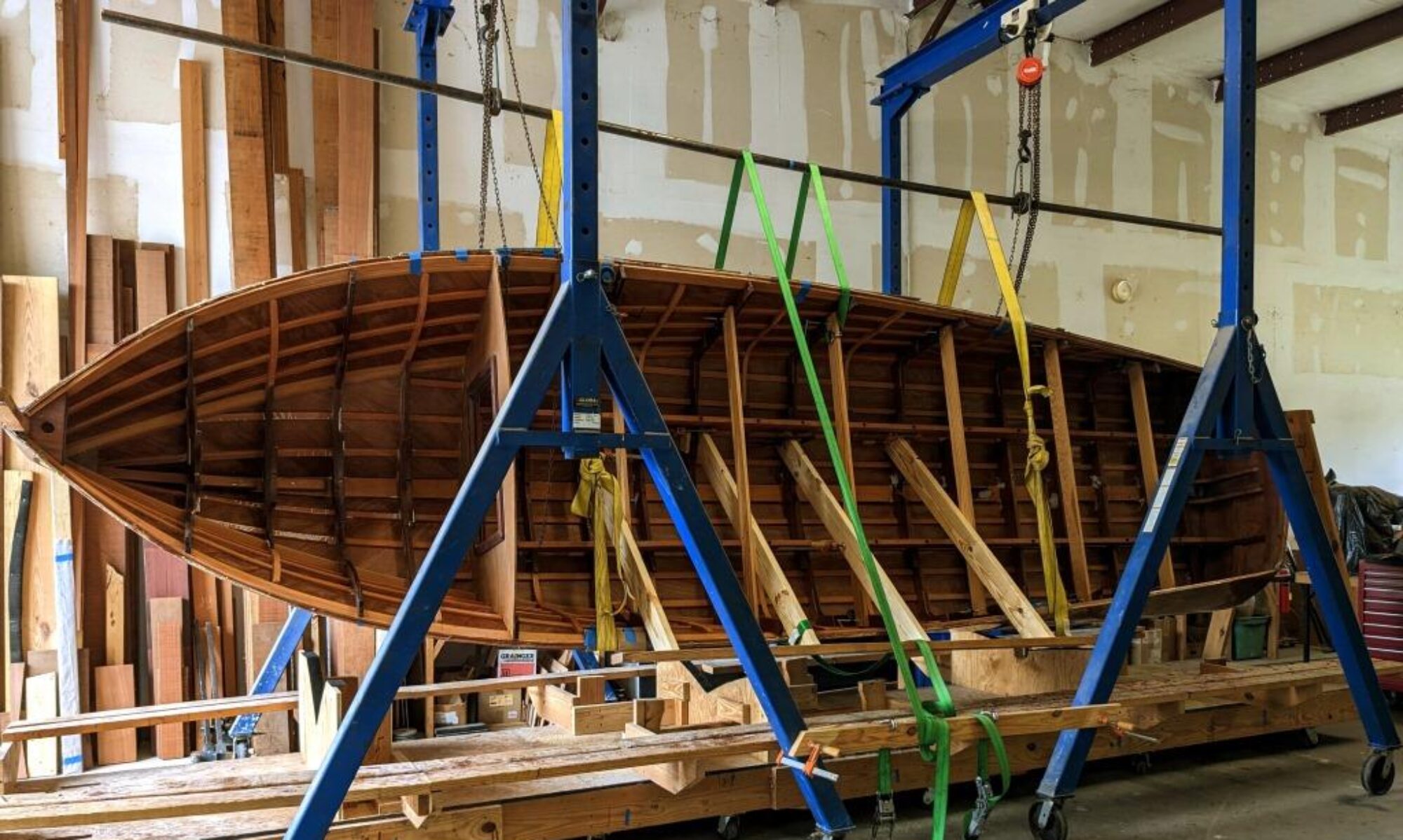
 The current project for Ashley River Boatworks is a 1949 Chris Craft 17 ft. Deluxe Runabout. This boat will receive a new bottom, upholstery, cockpit ceiling, and engine rebuild, and be completely refinished. It’s a long road, starting with a lot of research and investigation into how it was done originally at the factory. A good resource for this is the national Mariners Museum in Newport News, VA. They have an extensive archive of Chris Craft drawings, literature and marketing material. The original lines drawings were available for this project from the museum. I’ve actually been working on this boat for some time, and will be trying to catch up with posts on progress that has been made. By the way, did you notice anything funny about that bow light?